
This is the crest of Limerick, the place where I live. I really love this county and of course the city. Everything on this crest has a meaning.
The castle on the left is King Johns castle. It was used to keep invaders out of Ireland during the viking invasions in 922. You can get more information here: http://en.wikipedia.org/wiki/King_John)
The stone in the centre is the treaty stone. This is where the treaty of Limerick was signed in 1691. I don't really know much else but you can reads about it here: http://en.wikipedia.org/wiki/Treaty_of_Limerick
The hurleys and football are a symbol of Limericks participation in sport.  Hurling and gaelic football are traditional irish games. Hurling is played with a stick called a hurley and a small ball called a sliotar. 2teams play and can score goals and points by hitting the ball between the posts of the goals (which is a point) and if they get it in the goals it's a goal. The same thing applies in gaelic football but instead of using a hurley and sliotar you use a football. It is different to soccer as you can catch the ball in your hands and carry it.
 Hurling and gaelic football are traditional irish games. Hurling is played with a stick called a hurley and a small ball called a sliotar. 2teams play and can score goals and points by hitting the ball between the posts of the goals (which is a point) and if they get it in the goals it's a goal. The same thing applies in gaelic football but instead of using a hurley and sliotar you use a football. It is different to soccer as you can catch the ball in your hands and carry it.
 Here is a picture of Irelands biggest GAA stadium, Croke Park, in Dublin
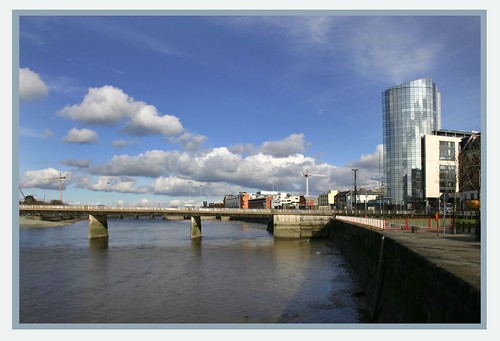
The river in the middle is the river Shannon. This river is the longest river in Ireland and it enters the Atlantic ocean at Limerick harbour.
The fields and town on the right represent the green fields around Limerick and it's towns.
God bless


